Famous Bust Sculptures in Marble: Iconic Greek & Roman Busts
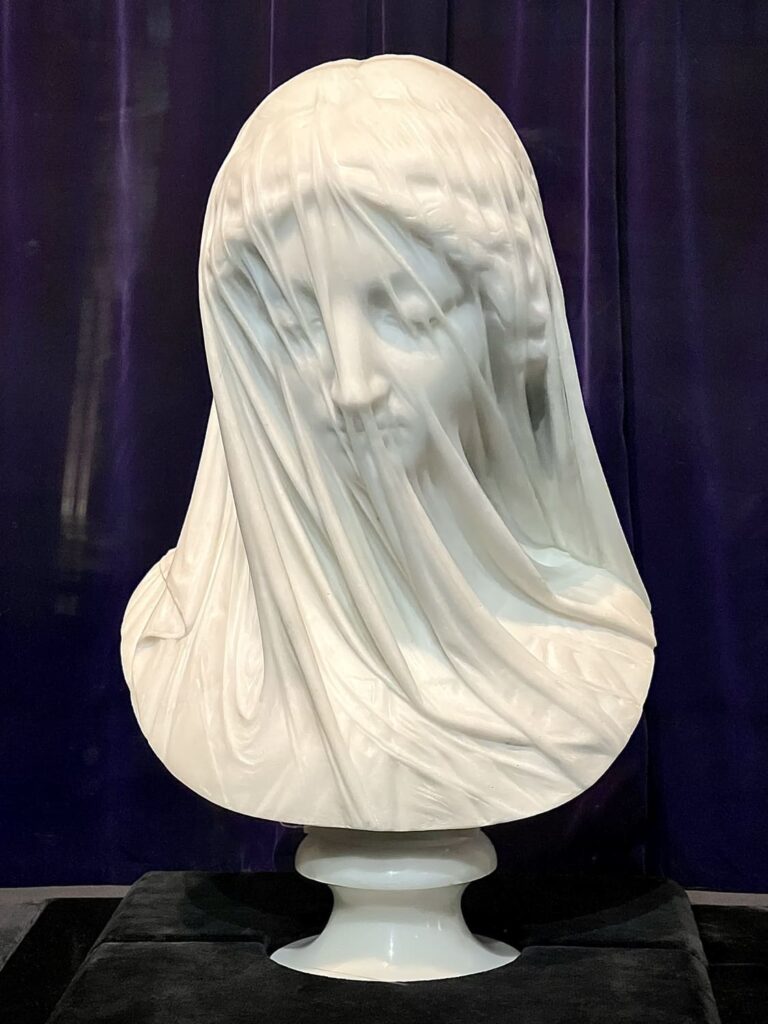
Summary
- The most famous bust sculptures in history from ancient Greece and Rome to the Renaissance, were made in marble, the material that defined Western portraiture for three millennia.
- Famous Greek busts were typically idealized, using the face to project philosophical or civic virtues rather than literal likeness. Roman busts reversed this, favoring unflinching realism: wrinkles, age, and asymmetry rendered without idealization.
- The most searched subjects in classical bust sculpture include Socrates, Aristotle, Julius Caesar, Marcus Aurelius, and Alexander the Great, all of which survive in multiple Roman copies.
- Marble’s durability, luminosity, and association with permanence made it the material of choice for portrait busts intended to outlast their subjects.
Some works of art outlast the civilizations that created them. The marble bust is one of the most resilient forms in the history of art, having survived the fall of empires, the erasure of centuries, and the constant disruption of artistic fashion. Walk through any major museum and you will find them: faces carved in stone, looking out at the world with a presence that has not diminished in two thousand years.
This article covers the most famous bust sculptures in marble, focusing on the Greek and Roman works that defined the form and the sculptors who pushed it furthest. It also explores what made each of these busts significant, not just as technical achievements, but as portraits of specific people at specific moments in history.
Why Marble Became the Material of Famous Busts
The Greeks and Romans did not choose marble arbitrarily. Marble is abundant across the Mediterranean, relatively easy to carve with the tools available in antiquity, and extraordinarily durable. But beyond the practical reasons, marble had qualities that made it uniquely suited to portrait sculpture.
Its translucency gives it a quality of light that resembles skin in certain conditions. Polished marble reflects without being metallic. Finished marble surfaces age slowly and predictably. And marble in its natural state is white, a color associated across antiquity with purity, permanence, and divine presence. The famous white surfaces we see today were often painted in the ancient world, but the base material was always chosen for its structural and visual qualities.
For famous marble busts intended to outlast their subjects, whether in a public square, a nobleman’s atrium, or an imperial hall, marble was the only serious choice.
Famous Greek Bust Sculptures
What we call famous Greek busts today are almost entirely Roman copies of lost originals, most of which were cast in bronze. The Romans admired Greek intellectual and artistic culture so deeply that they produced copies of their most revered thinkers and heroes in marble for display in homes, libraries, and public buildings. This is why we know what Socrates, Homer, and Pericles looked like at all.
Bust of Socrates
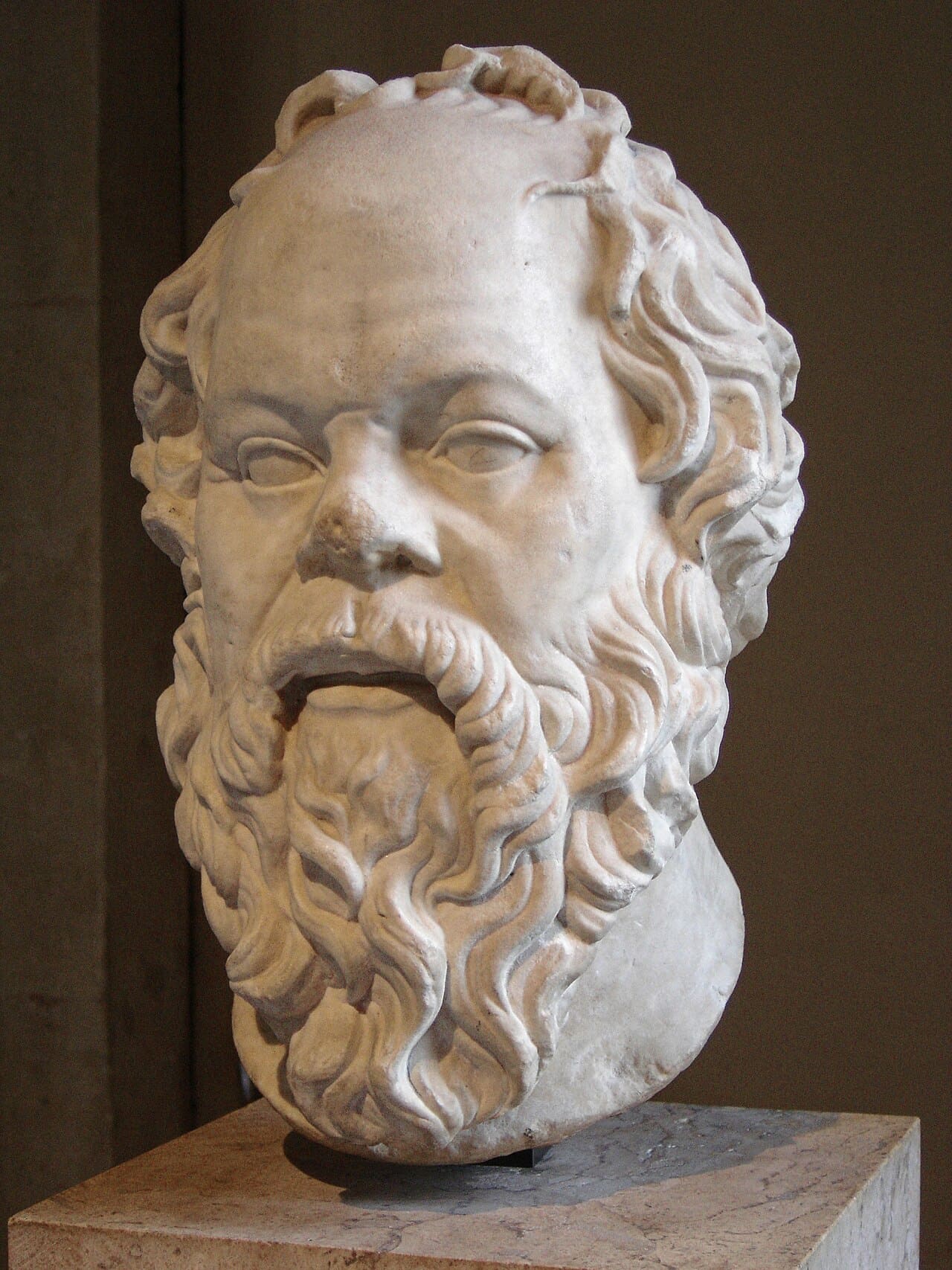
No face in the history of philosophy is more recognizable than Socrates, and that recognition comes entirely from bust sculpture. The original portrait was created by the sculptor Lysippos or a contemporary in the 4th century BCE and survives in numerous Roman copies. Socrates is consistently depicted with a broad, flat nose, wide-set eyes, and a heavy brow, features that ancient sources describe as deliberately ugly, contrasting with the beauty of his ideas. The Vatican Museums hold one of the finest copies. The British Museum holds another. The face has become so recognizable that it functions almost as a logo for philosophy itself.
Bust of Homer
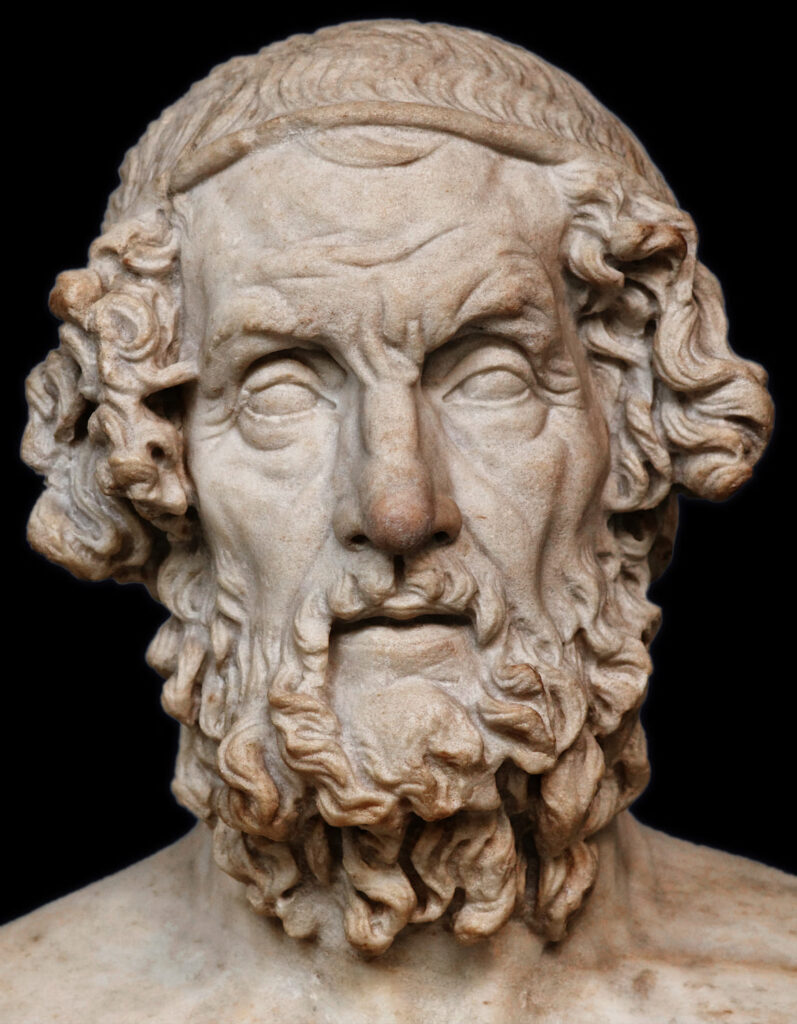
Homer is one of the most reproduced subjects in all of ancient bust sculpture. The famous Blind Homer type, with its sightless eyes, deeply furrowed brow, and parted lips, was created in the Hellenistic period and widely copied across the Roman world. The Met holds a celebrated example. The blindness is not incidental: ancient tradition held that Homer was blind, and sculptors used the empty eyes as a visual metaphor for inner vision, the poet who could not see the world but could see everything else.
Bust of Pericles
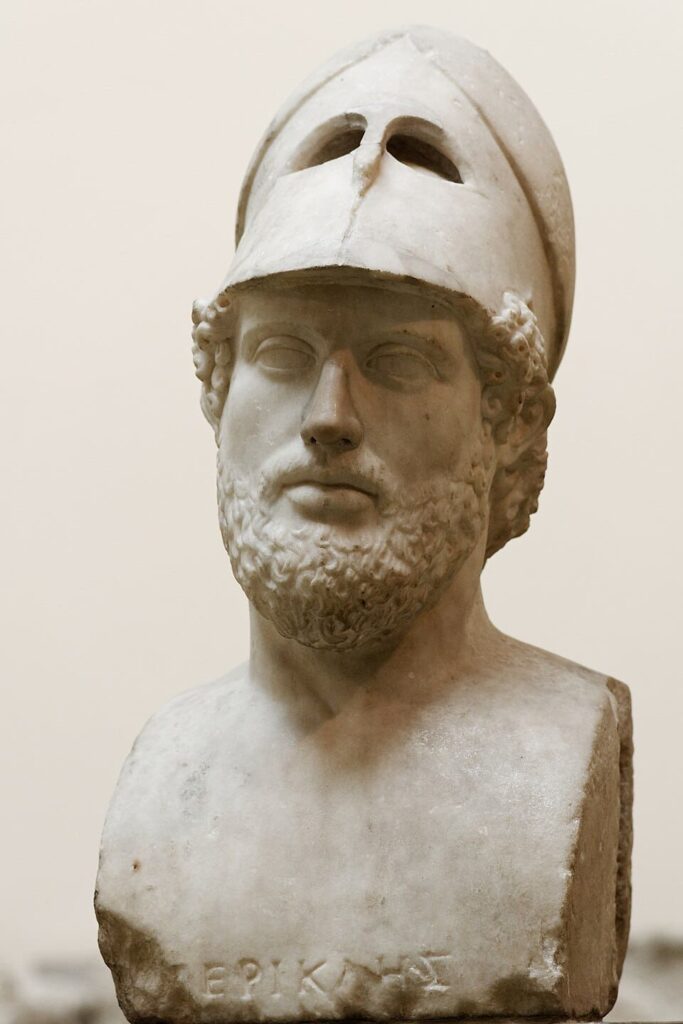
The Pericles bust by Kresilas (c. 430 BCE) is one of the few ancient busts we can attribute to a named sculptor from ancient sources. Pericles is shown wearing a Corinthian helmet pushed back on his head, a detail that simultaneously conveys military authority and civic composure. The original is lost; the Roman copy in the British Museum is the most famous surviving version. The inscription on the Venetian copy reads: “Pericles, son of Xanthippus, Athenian” — one of the few ancient busts whose identity is beyond reasonable doubt.
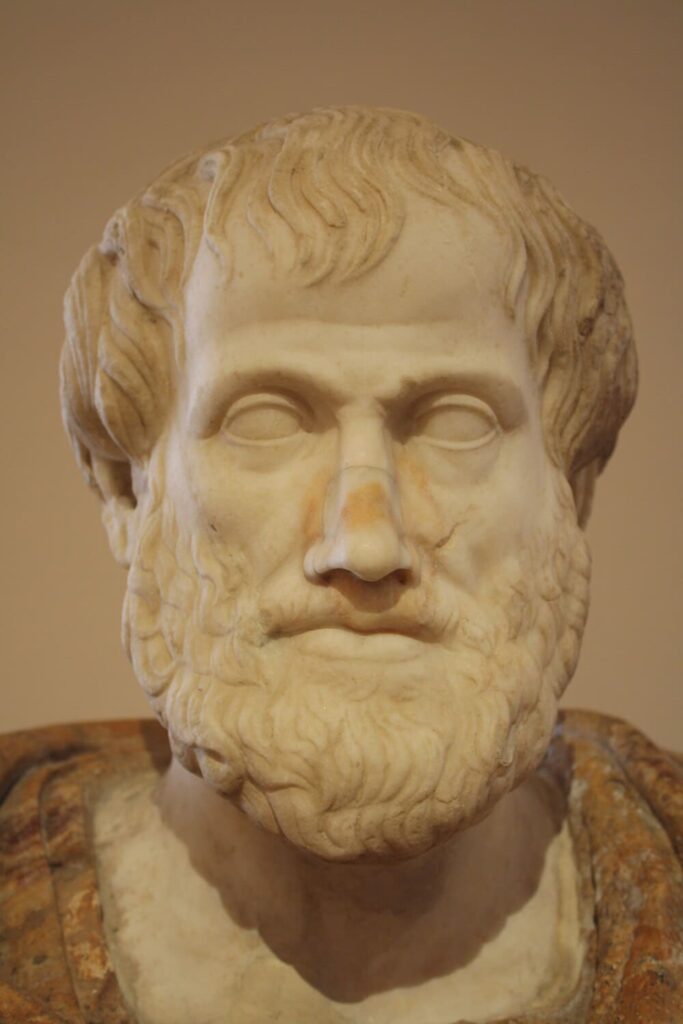
Bust of Aristotle
Aristotle is one of the most-searched subjects in famous bust sculptures and one of the most complex to identify. The portrait type traditionally associated with him shows a middle-aged man with a beard, compact features, and an expression of intense focus. The most famous version is held at the Kunsthistorisches Museum in Vienna. Several marble copies survive across European collections, though debates about which portrait type is authentic continue among art historians.
Famous Roman Bust Sculptures
Roman portrait sculpture operates on different principles from Greek. Where Greek busts tended toward idealization, representing a type or an ideal, famous Roman busts pursued a kind of aggressive realism. Wax death masks kept in Roman noble households (the imagines maiorum) were the starting point for a portrait tradition that valued accuracy above beauty. Age, asymmetry, and the visible marks of a life lived were not problems to be corrected. They were the point.
Bust of Julius Caesar
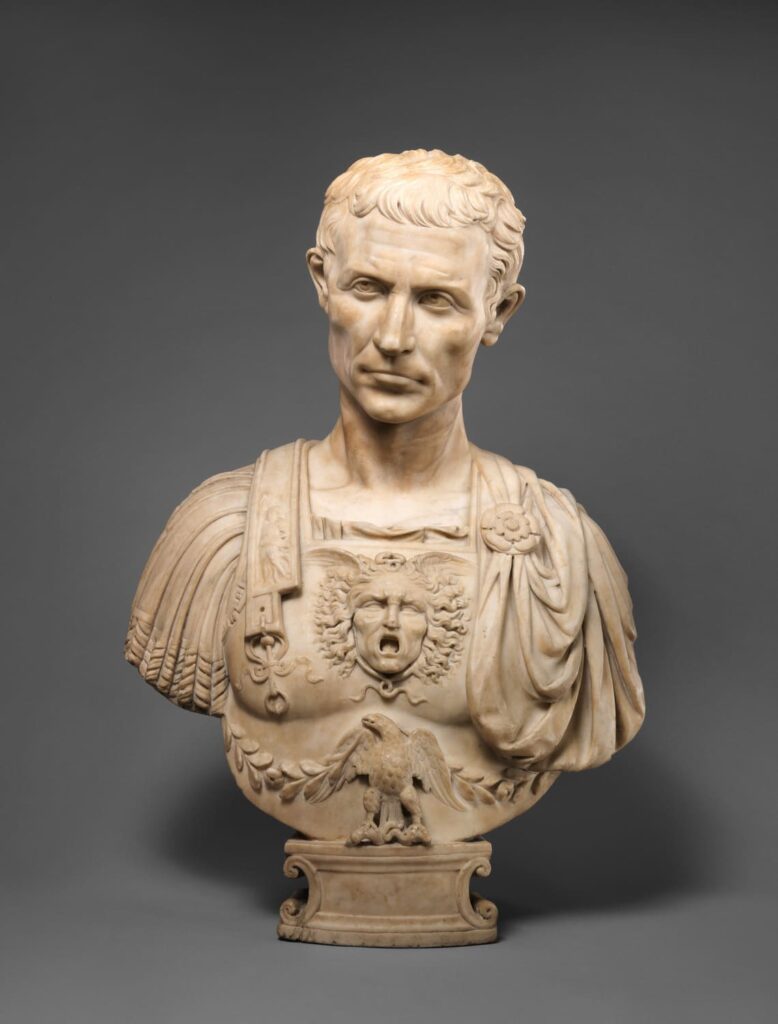
Julius Caesar is among the most-searched subjects in famous bust sculpture, and the historical record of what he actually looked like is genuinely complicated. Multiple portrait types exist, and not all of them agree. The so-called Tusculum portrait (Archaeological Museum of Turin) is one of the oldest and most credible, showing Caesar in middle age with a lean face, strong jaw, and the beginning of baldness he famously disliked. The Arles bust, found in the Rhone River near Arles and dated to around 46 BCE, is another notable example. Both show a man of obvious intelligence and physical force, without the softening that later imperial portraits would bring.
Bust of Augustus
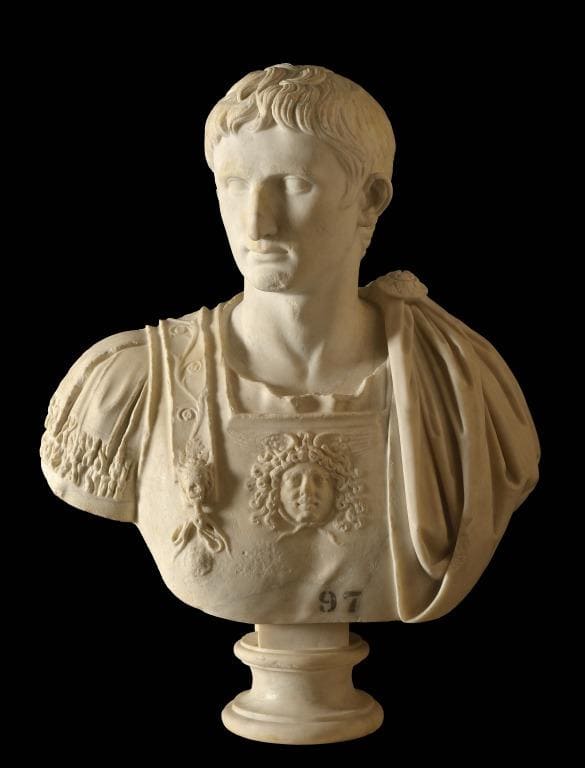
Augustus transformed the politics of Roman portraiture. While Republican busts had celebrated age and severity, Augustus returned to a Hellenistic model of idealized youth, presenting himself as a timeless figure rather than a mortal man growing old in office. The Prima Porta Augustus is the most famous full-body version, but the marble portrait busts of Augustus produced across the empire show a young face, smooth skin, and a carefully composed expression that was maintained consistently for decades. It was a deliberate political choice: the emperor as permanent institution rather than aging individual.
Bust of Marcus Aurelius
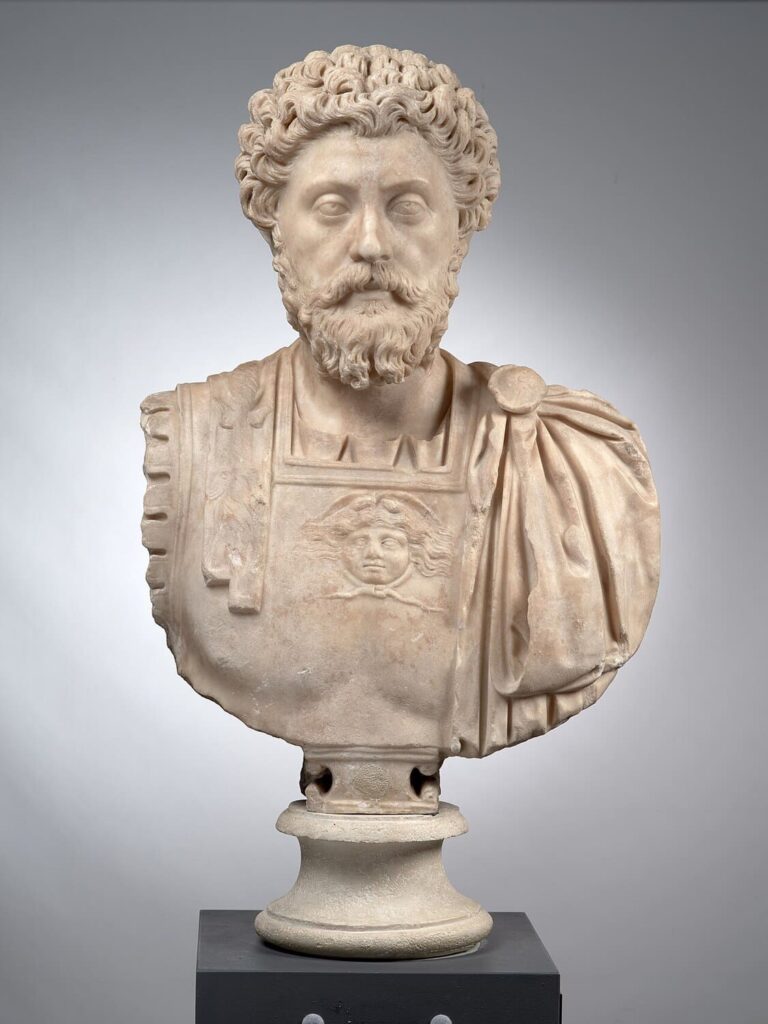
Marcus Aurelius is one of the most compelling subjects in Roman portrait sculpture, and his busts reflect the complexity of the man. The philosopher-emperor is typically shown with a thick, curling beard and an expression that reads as thoughtful, even troubled. Unlike the cool composure of Augustus, the famous marble busts of Marcus Aurelius give the impression of a man who has thought seriously about difficult things. The Capitoline Museums in Rome hold several exceptional examples. His busts circulated widely across the empire and remain among the most recognizable portraits of any ancient ruler.
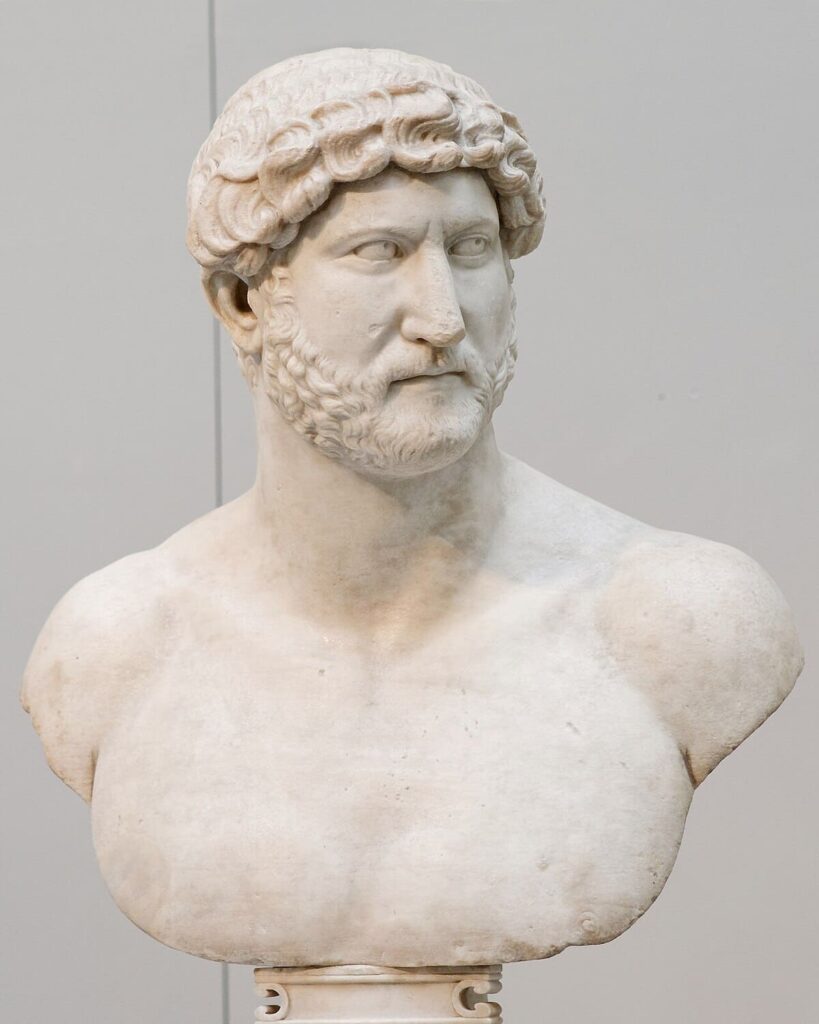
Bust of Hadrian
Hadrian was the first Roman emperor to wear a beard in his official portraits, a deliberate reference to Greek philosophical tradition. His busts show a broad-faced man with a carefully trimmed beard and an expression of measured calm. Hadrian was a serious intellectual and patron of the arts, and his portrait busts reflect this: they are among the most psychologically nuanced of all Roman imperial portraits. The British Museum holds a celebrated marble bust of Hadrian; the Capitoline Museums hold another.
Famous Busts beyond the Classical World
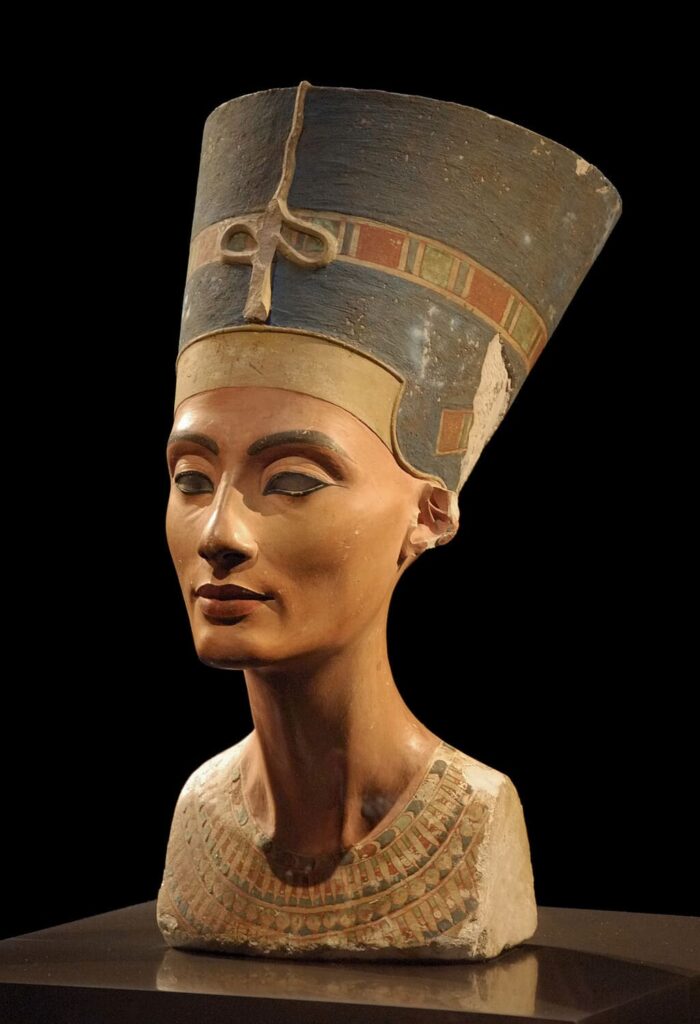
The Bust of Nefertiti (c. 1345 BCE)
The Nefertiti Bust predates the Greek and Roman tradition by more than a thousand years, but it remains the single most famous bust sculpture in history by most measures. Created by the sculptor Thutmose in ancient Egypt and now held at the Neues Museum in Berlin, it depicts the wife of Pharaoh Akhenaten in painted limestone. The elongated neck, high cheekbones, and one eye left blank (the inlay was never completed or was lost) create an image of extraordinary formal power. The bust was lost for over three thousand years, rediscovered in 1912, and has been the subject of diplomatic dispute between Germany and Egypt ever since. Its fame rests not just on its age but on the quality of its observation: the face is both idealized and specific in a way that feels startlingly modern.
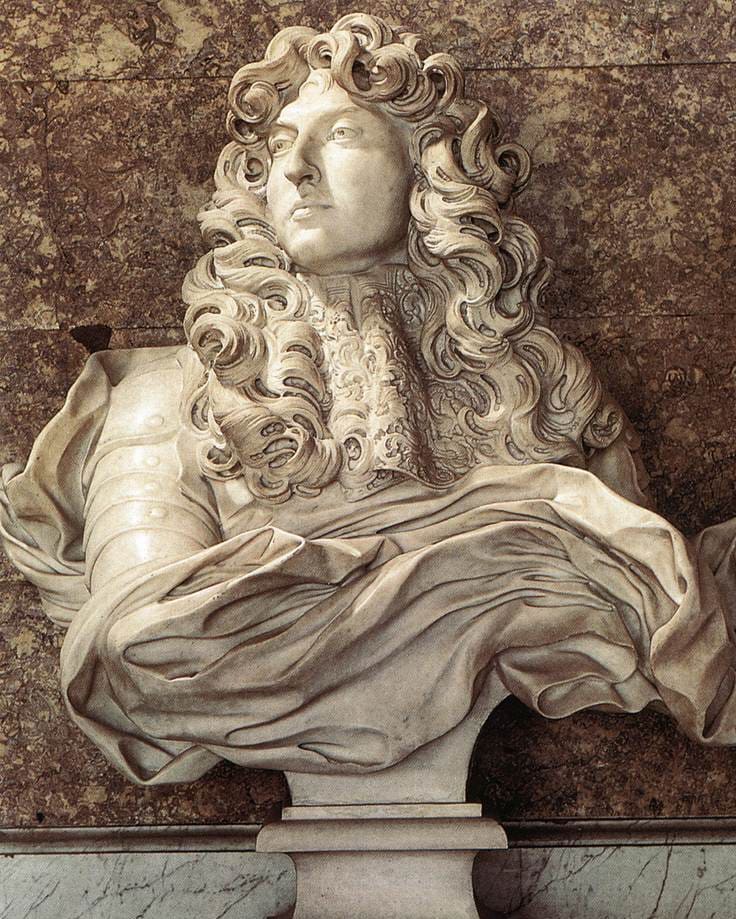
Bernini’s Bust of Louis XIV (1665)
Gian Lorenzo Bernini’s portrait of Louis XIV is one of the most technically astonishing marble busts ever made. The king’s hair and cravat appear to be in motion, frozen mid-sweep in a material that has no business suggesting movement at all. Bernini carved it during a visit to France, working from life. Louis reportedly said it looked more like him than his own reflection. Now held at the Palace of Versailles, it stands as the culmination of Baroque portraiture and a demonstration of what marble can do in extraordinary hands.
What Makes These Busts Endure
The famous busts listed above have survived for centuries or millennia for different reasons. Some endured because they were buried and forgotten, protected by the earth that covered them. Some survived because they were copied obsessively, the originals lost but the image preserved. Some survived because powerful institutions owned them and had reason to preserve them.
But beyond the accident of survival, these busts share something in craft: they manage to be both general and specific at the same time. The bust of Socrates is recognizable because it represents a type, the ugly philosopher, but it is also a portrait of a particular face. The bust of Marcus Aurelius is recognizable as a Roman emperor, but the expression is specific to this man. The best portrait busts do not merely record. They interpret. They make a claim about who someone was.
That is the challenge that has drawn sculptors to the bust as a form for three thousand years. Not likeness, but truth.
Commission a Marble Bust Sculpture
A bust sculpture is ultimately more than a representation of a person’s face. It is a study of presence, character, and human identity captured in three dimensions. From ancient marble portraits to contemporary works in bronze and other materials, the form has remained one of the most powerful ways to preserve memory and meaning.
For those considering a custom marble or bronze bust today, whether for a private collection, a commemorative purpose, or a public tribute, the process always begins with understanding the subject and the story behind it. To discuss a potential commission, you can get in touch with Paulina Cassimatis and explore how your idea can be translated into a lasting sculptural work.
Frequently Asked Questions
What are the most famous examples of bust sculptures?
The most famous bust sculptures in history include the Nefertiti Bust (c. 1345 BCE, Neues Museum Berlin), the Bust of Socrates (multiple Roman copies), the Bust of Julius Caesar (Tusculum portrait, Turin; Arles bust), the Bust of Marcus Aurelius (Capitoline Museums, Rome), the Bust of Pericles after Kresilas (British Museum), and Bernini’s Bust of Louis XIV (Palace of Versailles). All of the ancient examples survive as Roman copies or single originals.
Why is the Bust of Nefertiti so famous?
The Nefertiti Bust is famous for several reasons that compound each other. It is extraordinarily old, over 3,300 years, and in exceptional condition. The craftsmanship is of a quality rarely matched in ancient art: the face combines idealization with specific, individual observation. It was hidden for millennia, rediscovered dramatically in 1912, and immediately became one of the most recognized faces in art history. The ongoing diplomatic dispute between Germany and Egypt over its repatriation has kept it in the public conversation for decades.
What is the most famous sculptor of bust sculptures?
For ancient busts, the sculptor Lysippos of Sicyon (4th century BCE) is the most significant named figure, credited with portrait types of Alexander the Great, Socrates, and others that were copied across the Roman world. In the Baroque period, Gian Lorenzo Bernini (1598-1680) is the dominant figure in bust sculpture, with works including the Bust of Louis XIV and the Bust of Costanza Bonarelli that set the standard for psychological portraiture in marble. For contemporary figurative bust sculpture, attribution to individual living artists is more relevant.
What is the difference between Greek and Roman bust sculpture?
Greek busts tended toward idealization, representing philosophical or civic virtues rather than specific individual likenesses. Roman busts reversed this approach, favoring aggressive realism: age, wrinkles, asymmetry, and the physical marks of a lived life were rendered without correction. This difference reflects broader cultural values. Greek sculpture was often about types and ideals; Roman portraiture was about individuals and their place in a social and genealogical order.
Are marble busts still made today?
Yes. Custom marble busts are still commissioned today for private collections, public monuments, and commemorative purposes. The process of marble carving has not changed fundamentally since antiquity: the sculptor works from a clay model, transfers measurements to the marble block, and carves from the general form to the specific detail. The material remains the same, the tools have evolved, but the fundamental challenge of capturing a specific human presence in stone is unchanged.